Einstein's riddle

Logic puzzle based on deductive reasoning.

Play Now

About

Einstein's Riddle (also called the Zebra Puzzle) is a classic logic puzzle attributed — likely apocryphally — to Albert Einstein, who supposedly claimed only 2% of people could solve it. Five houses in a row, each a different color, each inhabited by a person of different nationality, keeping a different pet, drinking a different beverage, and smoking a different brand. Fifteen clues connect these attributes. Who owns the fish?

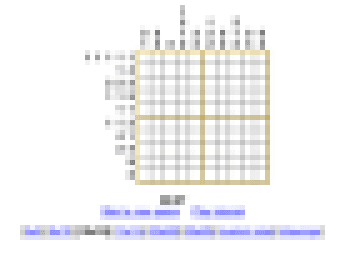
The puzzle is solved entirely through deductive elimination. Each clue eliminates possibilities; the constraints interact until only one consistent arrangement remains. Grid-based notation — a 5×5 table of attributes — is the standard solving tool, allowing you to mark known assignments and track eliminations methodically.

The puzzle takes 15–30 minutes for a careful first solve and rewards re-solving with different note-taking approaches. It's a perfect focused-break logic challenge with a clean, definitive answer.

How to Play

  • Create a 5×5 grid with houses (1–5) as rows and attributes (color, nationality, pet, drink, smoke) as columns.
  • Work through each clue, marking definite assignments and ruling out impossibilities.
  • Use positive clues ("the Englishman lives in the red house") to anchor specific cells.
  • Use negative inference: if attribute X is in position 3, it can't be anywhere else in that row or column.
  • Continue until every cell in the grid has exactly one valid value.

Tips

  • Start with the clues that give absolute positions (e.g., "the green house is immediately to the left of the white house").
  • Mark both positive (✓) and negative (✗) information in your grid — negatives are equally valuable.
  • When stuck, find the attribute with fewest remaining possibilities and enumerate them.

History

The Zebra Puzzle first appeared in print in Life International magazine in 1962 under the title "Who Owns the Zebra?" The Einstein attribution has no documented basis but has persisted since at least the 1990s. The puzzle is a classic example of a constraint satisfaction problem (CSP), and it's widely used in computer science education to teach backtracking search, arc consistency, and constraint propagation algorithms.

Play Einstein's riddle Now