About
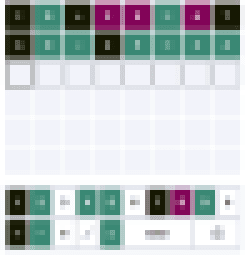
Nerdle is Wordle for mathematics. Instead of guessing a hidden word, you're guessing a hidden equation — a valid arithmetic statement like "12+34=46." Each position follows the same color-coded feedback: green for correct symbol in the right spot, purple for correct symbol in the wrong spot, black for symbols not in the equation.
Nerdle has 8 positions instead of Wordle's 5, and the puzzle space is dramatically different. You're working with digits (0–9), operators (+, -, *, /), and the equals sign. Valid guesses must be mathematically true equations — no random sequences allowed. This constraint is both limiting and helpfully narrowing.
For mathematically-minded people, Nerdle is deeply satisfying. It rewards both numerical intuition and deductive logic. The constraints of equation validity mean every guess provides rich structural information beyond just the symbols themselves.
How to Play
- Enter a valid 8-character arithmetic equation (e.g., 12+34=46) as your first guess.
- Equations must be mathematically correct — invalid equations cannot be submitted.
- Green: right symbol in right position. Purple: right symbol, wrong position. Black: not in equation.
- Use feedback to narrow down which digits and operators appear and where.
- Solve the hidden equation within 6 guesses.
Tips
- Your first guess should test multiple common operators and digits.
- Remember that standard order of operations applies — multiplication before addition.
- If you get a green equals sign position, all your equation structure around it is confirmed.
History
Nerdle was created by Richard Mann, a data scientist, and launched in January 2022, just weeks after Wordle went viral. It was one of the first and most successful Wordle variants, attracting hundreds of thousands of daily players. The game runs in two modes: classic (8 positions) and mini (6 positions). Its success spawned further math-puzzle variants and demonstrated how the Wordle formula could be adapted to non-word domains.