Orbital Shift
About
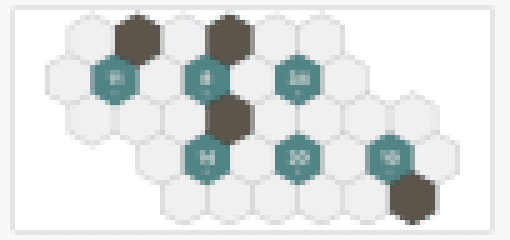
Orbital Shift is a clever hexagonal number puzzle. A central hexagon displays a target sum, and you must fill surrounding orbital rings with the digits 0 through 9 — each number used exactly once — so that each orbit's values add up to the center target. Black hexagons act as blockers that can be shifted between orbits to change which slots are active.
The puzzle is deceptively elegant. With only ten digits and strict uniqueness constraints, your solution space shrinks rapidly as you place each number. Moving black hexagons changes the orbit structure, creating a whole new layer of combinatorial thinking on top of basic arithmetic.
Orbital Shift is ideal for a focused 5–10 minute break. Each puzzle has a clean, satisfying solution and the visual design is crisp and calming. It scratches the same itch as Sudoku but with a more spatial, orbital twist.
How to Play
- Look at the center hexagon to find your target sum for each orbit.
- Place digits 0–9 in the surrounding hexagonal slots, each digit used exactly once.
- Each complete orbit must sum to the target number shown.
- Click black hexagons to shift them between orbits, changing which slots are active.
- Fill all slots correctly to complete the puzzle.
Tips
- Start by placing digits in orbits with fewer open slots — less ambiguity.
- Use process of elimination: if you know one orbit's values, the remaining digits narrow fast.
- Shifting black hexagons changes orbit membership — experiment before committing numbers.
History
Orbital Shift is an independent puzzle game released in 2026, combining ideas from classic number placement puzzles like Sudoku with a novel hexagonal orbital structure. It represents a growing genre of minimalist browser puzzles designed for quick intellectual engagement. The game was developed as a fresh take on sum-constraint puzzles, emphasizing visual clarity and unique digit placement as its core mechanical identity.