About
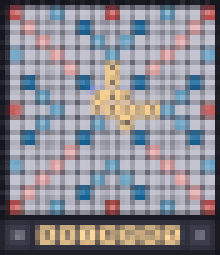
Scrabble is a word-building board game where players place letter tiles on a 15×15 grid to form intersecting words, scoring points based on letter values and premium squares. Double and triple word/letter squares create pivotal moments where the right word in the right place can swing the game dramatically.
The game rewards a blend of vocabulary, spatial thinking, and tile management. Knowing the two- and three-letter words valid in Scrabble often matters more than knowing long words. Balancing immediate scoring against setting up premium squares for opponents is the strategic layer.
Digital Scrabble handles scoring and dictionary lookups automatically, making it ideal for focused break sessions where even a single turn — studying your rack, scanning the board, finding the best word — is a satisfying mental exercise.
How to Play
- Draw seven tiles; place them on the board to form a word connecting to existing tiles.
- Every word formed or extended by your placement scores simultaneously.
- Score each tile at face value, then apply premium squares covered by newly placed tiles.
- Upper section total of 63+ earns a 35-point bonus.
- Exchange tiles if you can't play, forfeiting your turn.
Tips
- Learn the two-letter word list — QI, ZA, JO, XI are legal and essential for tight spots.
- Hold S tiles and blanks for high-value plays hitting triple-word squares.
- Aim for a balanced rack — if you have five vowels, shed excess vowels even at cost of a few points.
History
Scrabble was invented by Alfred Mosher Butts during the Great Depression. A pivotal moment came in 1952 when the chairman of Macy's discovered the game on vacation and ordered it for his stores, triggering demand that transformed Scrabble into a national phenomenon. Today it's played in 29 languages and over 120 countries, with competitive players studying specialized word lists of thousands of obscure but legal terms.